
Uncategorized

Uncategorized

Income Tax Refund

An Income Tax Refund is a financial return from the government to a taxpayer when excess tax has been paid over the actual tax liability. In simple terms, if you’ve paid more tax than you were required to—through TDS, advance tax, or self-assessment tax—you are eligible for a refund after filing your Income Tax Return (ITR). This guide explains the concept of income tax refund in India, eligibility, filing process, status check, refund delays, and frequently asked questions. What is Income Tax Refund? A tax refund arises when the tax paid by a taxpayer is higher than their actual tax liability for the financial year. This could happen due to: After filing the ITR and assessment by the Income Tax Department, if it is determined that you paid more tax, a refund is issued to your bank account. Who Can Claim a Refund? Any taxpayer—individual, company, partnership, HUF, or NRI—can claim an income tax refund if: When and How to Claim an Income Tax Refund You can claim a refund only after filing your Income Tax Return (ITR) for the relevant Assessment Year. The Income Tax Department processes the return and calculates the refund automatically. Steps to Claim Income Tax Refund: Note: You must file ITR before the deadline (usually 31st July for individuals) to claim a refund. Documents Required to Claim Refund How to Check Income Tax Refund Status Once your ITR is processed and the refund is issued, you can track its status online. Method 1: Income Tax e-Filing Portal Method 2: NSDL Refund Tracking Time Taken to Get Income Tax Refund As per the Income Tax Department, refunds are usually processed within: Faster processing is possible if: Why Income Tax Refund May Be Delayed Refunds may be delayed due to: You can raise a grievance on the e-filing portal or contact the Centralized Processing Centre (CPC) at Bengaluru if there’s an unusual delay. Interest on Income Tax Refund Under Section 244A, if your refund is more than 10% of the total tax paid, you are eligible to receive interest at 0.5% per month (6% per annum) for the delay in receiving the refund. The interest is calculated from: Note: Interest received on refunds is taxable and should be declared in next year’s ITR under “Income from Other Sources.” How to Revise ITR for Higher Refund If you forgot to claim deductions or made an error, you can file a Revised Return under Section 139(5). This can increase your eligible refund amount. Refund Reissue Request If your refund failed due to incorrect bank details or closure of bank account, you can request a Refund Reissue. Steps: Common Mistakes to Avoid FAQs on Income Tax Refund Q1. Is filing ITR necessary to get a refund? Yes, filing ITR is mandatory to claim any refund from the Income Tax Department. Q2. How will I receive the refund? Refund is directly credited to your bank account via ECS. Ensure bank details and IFSC code are correct. Q3. What if I don’t receive my refund? You can raise a refund reissue request or contact CPC if the delay exceeds 45 days. Q4. Is refund taxable? Only the interest on refund (Section 244A) is taxable, not the refund amount itself. Q5. Can I get a refund if I filed ITR after the due date? Yes, but interest under Section 244A may not be paid for delayed filings. Conclusion Claiming an Income Tax Refund is your right as a taxpayer if you’ve overpaid taxes during the financial year. It is important to file your ITR accurately and on time, maintain proper records, and regularly check your refund status. With digital systems and faster processing by the Income Tax Department, refunds are now easier and quicker than ever before. Take advantage of this system to optimize your personal or business cash flow and maintain good financial health.


Uncategorized

Income Tax Return

Filing an Income Tax Return (ITR) is a crucial financial responsibility for individuals, businesses, and other entities. In India, the Income Tax Department under the Ministry of Finance governs income tax laws and collects revenue for public services and development. This guide provides a comprehensive understanding of what an ITR is, why it’s important, types of ITR forms, filing procedures, benefits, and common FAQs. What is an Income Tax Return (ITR)? An Income Tax Return is a form used to report an individual’s or a business’s annual income, deductions, taxes paid, and other financial information to the Income Tax Department of India. Based on the details submitted, the department assesses whether additional taxes are owed or if a refund is due. Filing is mandatory if your gross total income exceeds the exemption limit set by the government. Even if it’s not mandatory in your case, filing ITR has several benefits. Who Should File an ITR? You must file an ITR if: Types of ITR Forms There are different ITR forms based on the nature and amount of income: 1. ITR-1 (Sahaj) For individuals earning: 2. ITR-2 For individuals and HUFs not having income from business/profession. 3. ITR-3 For individuals and HUFs having income from business or profession. 4. ITR-4 (Sugam) For presumptive income (under Sections 44AD, 44ADA, and 44AE). Suitable for small businesses or professionals with turnover up to ₹2 crore. 5. ITR-5 For partnerships, LLPs, AOPs, BOIs, and others. 6. ITR-6 For companies (except those claiming exemption under section 11 — income from property held for charitable purposes). 7. ITR-7 For persons including trusts, political parties, or institutions claiming exemptions. Due Dates for Filing ITR Category Due Date (AY 2024-25) Individual / HUF (non-audit) 31st July 2024 Audit Cases (Business/Profession) 31st October 2024 Companies 31st October 2024 Note: Late filing attracts interest under Section 234A and a penalty up to ₹5,000. Steps to File Income Tax Return Online Key Documents Required Benefits of Filing ITR 1. Loan and Visa Approvals ITR is a mandatory document for processing home loans, car loans, and even applying for visas. 2. Claim Tax Refund If excess tax is deducted (TDS), filing ITR helps claim the refund. 3. Avoid Penalties Filing ITR on time avoids legal penalties and interest. 4. Carry Forward Losses You can carry forward capital/business losses only if you file ITR on time. 5. Legal Proof of Income ITR serves as income proof, especially for self-employed individuals. Common Mistakes to Avoid Consequences of Not Filing ITR New Updates and Changes (As of AY 2024-25) FAQs About Income Tax Return Q1. Is it mandatory to file ITR if my income is below the exemption limit? No, but you should file voluntarily to claim refunds or keep records. Q2. What is the penalty for not filing ITR? A late fee up to ₹5,000 and interest on due tax may be levied. Q3. How can I correct a mistake in my filed ITR? You can file a Revised Return before the due date for the next assessment year. Q4. Is ITR filing necessary for NRIs? Yes, if they earn taxable income in India. Q5. Can ITR be filed manually? Manual filing is allowed only in specific cases. Most individuals must file online. Conclusion Filing your Income Tax Return is not just a legal duty — it is a reflection of your financial discipline and responsibility. Whether you’re a salaried individual, freelancer, businessman, or investor, filing ITR accurately and on time can save you from future hassles and ensure smooth financial planning. Use government tools like the ITR utility and consult a tax expert if needed.

Uncategorized

GST Notice

The Goods and Services Tax (GST) regime in India is designed to ensure tax compliance through transparency, digitization, and real-time monitoring. One of the mechanisms used by the government to ensure this compliance is the issuance of GST Notices. If you’re a registered GST taxpayer, receiving a notice from the GST department may seem alarming—but it’s also common. This article explains what a GST notice is, its types, why it is issued, how to respond to one, possible penalties, and best practices to avoid receiving one in the first place. What is a GST Notice? A GST notice is a formal communication issued by GST authorities to taxpayers when there is a discrepancy, non-compliance, delay, under-reporting, or suspicion of tax evasion. It serves as an intimation that the taxpayer needs to either provide clarification, pay outstanding dues, or correct a mistake. Notices are sent electronically on the GST Portal and also via email or SMS linked to the taxpayer’s GST registration. Reasons for Receiving a GST Notice Some of the most common reasons include: Types of GST Notices There are several kinds of notices a registered person may receive. Here are the most common ones: 1. GSTR-3A Notice – Non-Filing of Returns Issued when a taxpayer fails to file monthly or quarterly GST returns within the due date. It’s an intimation to comply before penalties are levied. Action: File the pending returns immediately to avoid penalties and late fees. 2. Notice under Section 61 – Scrutiny of Returns Issued when discrepancies are found in GSTR-1 and GSTR-3B or other returns. Example: Your GSTR-1 shows ₹10 lakh in sales, but GSTR-3B reflects only ₹8 lakh. Action: Respond with supporting documents or correct the returns if a genuine error exists. 3. Notice under Section 65 – Audit by Tax Authorities Issued when the department conducts a tax audit of your business to check records and compliance. Action: Cooperate with the audit and furnish required records—like books of accounts, invoices, and reconciliation statements. 4. Notice under Section 67 – Inspection/Search/Seizure Issued when the department suspects tax evasion, fraud, or suppression of turnover. Action: Serious in nature—consult a GST consultant immediately and ensure all documents are in order. 5. Notice under Section 73 – Tax Not Paid/Short Paid (Without Fraud) Issued when tax has not been paid or short paid without fraudulent intention or suppression of facts. Time limit: Within 3 years from the due date of filing the annual return. Action: Pay tax with interest, or reply with evidence to defend your case. 6. Notice under Section 74 – Tax Not Paid (With Fraud) Issued when tax is unpaid or underpaid with intention to evade tax, fraudulent documentation, or suppression. Time limit: 5 years from the due date. Action: Serious consequences. Legal assistance is recommended. 7. Show Cause Notice (SCN) A notice asking the taxpayer to explain why action (penalty, recovery, or cancellation of registration) should not be taken. Example: “Why should your registration not be cancelled for non-filing of returns for 6 months?” Action: Provide a satisfactory reply with documentation within the stipulated time. 8. ASMT-10 – Discrepancy in Return Scrutiny Issued when the officer finds inconsistencies during return scrutiny. Example: ITC claim is much higher than eligible credit as per GSTR-2B. Action: Respond within 15 days using form ASMT-11, along with explanations and records. 9. REG-03 – Clarification on GST Registration Application Issued when the GST officer requires additional details for registration approval. Action: Respond via REG-04 within 7 working days. 10. CMP-05 – Composition Scheme Violation Issued to composition scheme taxpayers found ineligible or violating rules. Action: Respond with justification or shift to regular taxpayer status. How to Respond to a GST Notice Step 1: Read Carefully Login to the GST portal, download the notice, and read it thoroughly. Understand the section number, reason, and required response. Step 2: Consult Your Accountant or GST Practitioner Engage a qualified professional to evaluate the issue and draft a response. Step 3: Prepare the Response Prepare a written reply, attach relevant documents like: Step 4: File the Reply Online Most notices have to be responded to through the “View Notices and Orders” section on the GST portal. Step 5: Keep Acknowledgment Save the acknowledgment, screenshots, and final response PDF for your records. Penalties for Not Responding to GST Notices Failure to respond or comply with a GST notice may lead to: How Accountants and Tax Consultants Help ✅ Analyze the Notice A professional can interpret complex legal language and identify the issue. ✅ Draft Accurate Responses Helps prepare well-structured replies with correct formats and attachments. ✅ Represent Before Authorities In some cases, a Chartered Accountant or GST Practitioner can represent you during hearings. ✅ Preventive Compliance Accountants ensure timely return filing, correct ITC claims, and avoid future notices. Best Practices to Avoid GST Notices Conclusion Receiving a GST notice is not necessarily a cause for panic. It’s a part of the government’s tax monitoring and compliance procedure. What’s important is how timely and accurately you respond to it. Whether it’s a minor discrepancy or a serious audit issue, always consult a qualified GST accountant or practitioner. Staying proactive, maintaining proper records, and adopting sound accounting practices can help you avoid GST notices, minimize risks, and keep your business compliant.

Uncategorized

GST Return Filing by Accountant

In India’s Goods and Services Tax (GST) regime, return filing is a crucial compliance requirement for every registered business. The process involves the reporting of sales, purchases, input tax credit (ITC), and tax liability to the government. For many businesses, especially small and medium enterprises (SMEs), the GST filing process can be complex. That’s where accountants and GST practitioners play an essential role. This guide explains everything you need to know about GST return filing by an accountant – from the types of returns, responsibilities of the accountant, process, documents required, and benefits of professional help. What is GST Return Filing? A GST return is a document that contains details of all income, sales, purchases, and taxes paid or collected by a taxpayer. It must be filed online on the GST portal (www.gst.gov.in) regularly, depending on the type and size of the business. There are various types of GST returns, and different businesses are required to file different returns monthly, quarterly, or annually. Role of an Accountant in GST Return Filing An accountant or GST practitioner assists businesses in managing their GST compliance effectively. Their role includes: Hiring a professional ensures accuracy, legal compliance, and peace of mind, especially when rules are frequently updated. Types of GST Returns Filed by Accountants An accountant usually handles the following GST returns on behalf of businesses: 1. GSTR-1 (Monthly or Quarterly) 2. GSTR-3B (Monthly or Quarterly) 3. GSTR-4 (Annually) 4. GSTR-9 (Annually) 5. GSTR-9C 6. GSTR-7 and GSTR-8 GST Return Filing Process by an Accountant Step 1: Data Collection The accountant collects the following from the client: Step 2: Data Reconciliation This step involves matching: Step 3: Preparing Returns The accountant prepares the applicable return(s) based on the turnover and business type. Step 4: Client Review The draft return is shared with the business owner for confirmation before final submission. Step 5: Filing Returns Returns are filed on the GST portal using the client’s login credentials and Digital Signature Certificate (DSC) or Electronic Verification Code (EVC). Step 6: Acknowledgment and Payment Once filed, a confirmation is received along with a Challan (GST PMT-06) if tax payment is required. Documents Required for GST Return Filing To file GST returns accurately, the following documents are typically required: Accountants may use this data to prepare ledgers and match it with returns to ensure there are no mismatches. Benefits of Hiring an Accountant for GST Return Filing 1. Expertise An experienced accountant is well-versed in changing GST laws and knows how to apply the correct rules, tax rates, and exemptions. 2. Error-Free Filing Mistakes in GST filing can lead to notices, penalties, and even denial of ITC. An accountant reduces this risk. 3. Timely Compliance Late filing attracts heavy penalties. Accountants ensure all returns are filed on or before due dates. 4. Better ITC Management Proper reconciliation ensures the business gets the maximum eligible Input Tax Credit without rejection. 5. Responding to GST Notices Accountants can represent the business and reply to any GST department inquiries or notices efficiently. 6. Record Maintenance Books of accounts, ledgers, and tax documents are maintained systematically, aiding in audits or assessments. Penalties for Non-Compliance Late or incorrect return filing attracts: An accountant helps avoid these penalties by ensuring continuous compliance. Cost of Hiring an Accountant for GST Filing Fees vary based on: Typical monthly charges: Annual packages, discounts, and bundled services (like TDS filing, ITR, ROC compliance) may also be available. Choosing the Right Accountant or GST Consultant When selecting a professional for GST filing, ensure they: You can also verify the credentials of a GST practitioner on the GST portal. Conclusion GST return filing is a core compliance activity that businesses cannot afford to neglect. With increasing digitization and strict penalties for non-compliance, having an accountant to manage your GST returns ensures peace of mind, accuracy, and time savings. Whether you’re a startup, trader, service provider, or manufacturer, professional help in return filing can save you from unnecessary financial and legal troubles. By delegating GST tasks to a competent accountant, you can focus more on your business growth while staying 100% compliant with the Indian tax system.

Uncategorized

GST E-Invoicing Software

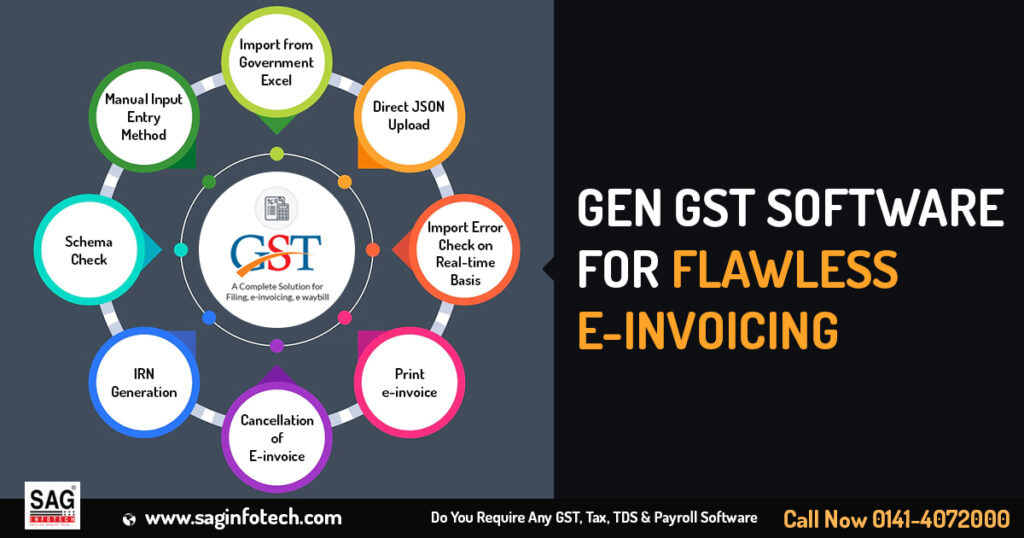
With the evolution of the Goods and Services Tax (GST) system in India, e-invoicing has emerged as a game-changer in digital tax compliance. E-invoicing or Electronic Invoicing under GST mandates businesses to generate invoices through a government-approved portal in a standardized format. To ensure smooth compliance, businesses are increasingly adopting GST e-invoicing software to automate and streamline the process. In this guide, we will explain what GST e-invoicing is, how it works, why businesses need e-invoicing software, and the features you should look for in a good e-invoicing solution. What is GST E-Invoicing? E-invoicing under GST is a system where invoices generated by businesses are electronically authenticated by the GST Network (GSTN). Once verified, a unique Invoice Reference Number (IRN) and QR code are issued. Introduced in phases, e-invoicing is now mandatory for businesses with turnover exceeding ₹5 crores (as of FY 2024-25). The main goal is to: How Does E-Invoicing Work? Here’s a step-by-step breakdown of the e-invoicing process: Why Use GST E-Invoicing Software? While the e-invoicing process can be done manually by uploading invoice JSON files to the government portal, this is time-consuming and error-prone. E-invoicing software simplifies the entire process through automation and system integration. Key Benefits of Using E-Invoicing Software: Features to Look for in E-Invoicing Software Choosing the right e-invoicing software is crucial for ensuring GST compliance and operational efficiency. Here are the top features to consider: 1. IRP Integration Ensure the software is integrated with Invoice Registration Portals for real-time IRN and QR code generation. 2. Bulk Upload The software should allow bulk invoice generation and processing, especially if you issue hundreds or thousands of invoices monthly. 3. ERP Compatibility It should integrate easily with existing ERP or accounting software like Tally, SAP, Zoho Books, QuickBooks, or custom solutions. 4. Auto QR Code & IRN Invoices should automatically be updated with QR codes and IRNs without manual intervention. 5. GSTR Return Sync The tool should auto-sync invoices with GSTR-1 returns, making filing faster and accurate. 6. Validation Checks The software should offer pre-validation of invoices before uploading, preventing rejections from IRP. 7. Customizable Templates Ability to customize invoice design, branding, and layout as per business requirements. 8. User-Friendly Interface A dashboard that’s easy to navigate, with summary views of pending, approved, and rejected invoices. 9. Security & Data Privacy Ensure the software complies with data security standards and offers encryption and secure storage of sensitive data. 10. Support & Updates Choose software providers that offer real-time support and updates in line with GST rules. Popular GST E-Invoicing Software in India Here are some of the most trusted e-invoicing software providers in India: 1. ClearTax 2. Zoho Books 3. TallyPrime 4. Marg ERP 5. SAP GST Solution Compliance Requirements for E-Invoicing To be compliant with GST e-invoicing, businesses must: Failing to generate an e-invoice when required can result in: Who Needs GST E-Invoicing Software? As of 2024, e-invoicing is mandatory for: Even businesses not mandatorily required can opt for e-invoicing voluntarily for efficiency and digital record-keeping. Future of E-Invoicing in India The government is progressively lowering the turnover threshold for e-invoicing. Eventually, e-invoicing may become mandatory for all registered businesses, regardless of turnover. This makes it essential for even small and medium businesses to adopt GST e-invoicing software early to stay ahead and avoid last-minute compliance pressure. Conclusion GST e-invoicing is not just a legal requirement—it’s a strategic move toward greater transparency, reduced manual errors, and faster GST return processing. Choosing the right GST e-invoicing software helps businesses comply with the law, avoid penalties, and save time and costs. Whether you’re a startup, SME, or large enterprise, investing in reliable e-invoicing software today will future-proof your operations and keep your business GST-compliant.

Uncategorized

GST Registration

Goods and Services Tax (GST) is a comprehensive, destination-based indirect tax levied on the supply of goods and services in India. Implemented on 1st July 2017, GST has replaced several indirect taxes that were previously levied by the central and state governments. GST registration is mandatory for certain businesses and voluntary for others, depending on turnover and nature of operations. In this article, we will explore everything you need to know about GST registration in India. What is GST Registration? GST registration is the process by which a taxpayer gets registered under Goods and Services Tax. Once registered, a unique 15-digit GST Identification Number (GSTIN) is assigned. This number is used to track tax payments and compliance of the registered business. Who Needs GST Registration? GST registration is mandatory for: Voluntary registration is also allowed, even if the turnover is below the threshold. Benefits of GST Registration Documents Required for GST Registration The documentation depends on the type of business: For Proprietorship: For Partnership / LLP: For Private Limited / Public Company: How to Register for GST Online? The process for GST registration is fully online through the GST portal (https://www.gst.gov.in/). Below is a step-by-step guide: Step 1: Visit the GST Portal Go to https://www.gst.gov.in/ and click on “Register Now” under “Taxpayers (Normal/TDS/TCS)”. Step 2: Fill Part A of the Application Enter: Step 3: Receive Temporary Reference Number (TRN) After OTP verification, you’ll get a TRN which is valid for 15 days. Step 4: Fill Part B of the Application Using TRN, log in and complete the application: Step 5: Verification Once the application is filled, it can be submitted using Digital Signature Certificate (DSC) or Electronic Verification Code (EVC). Step 6: GST Certificate Issued If everything is in order, the GST Officer issues a GSTIN and certificate within 7 working days. Types of GST Registration GST Composition Scheme Businesses with turnover up to: Can opt for the composition scheme with reduced tax rates: However, they: Penalty for Not Registering under GST If a business required to register under GST fails to do so: Post Registration Compliance Once registered under GST, the business must: Cancellation of GST Registration GST registration can be canceled: The taxpayer must apply for cancellation on the GST portal and file final returns. Revocation of Cancellation If the registration is canceled by the department, the taxpayer can file an application for revocation within 30 days of the cancellation order, provided all returns and dues are cleared. Common Issues in GST Registration These issues can be resolved with careful filing and timely response to notices. Conclusion GST registration is not just a legal obligation but also a smart business move. It opens up opportunities for expansion, increases transparency, and offers significant input tax benefits. Whether you’re a small trader or a growing startup, getting registered under GST will help streamline your tax processes and make your business GST-compliant. If you are unsure or face challenges in the registration process, it is advisable to consult a professional CA or GST practitioner to ensure a smooth experience.

Uncategorized

Scratch Card Strategies and Tips for Success

Understanding Scratch Cards: The Basics

Scratch cards are a popular instant-win game found in both physical and online casinos. Players purchase a card and scratch off a protective layer to reveal symbols or numbers, hoping to match winning combinations. The appeal lies in the immediacy of the game; however, understanding the underlying mechanics is crucial for maximizing your chances of success.

Why Scratch Card Strategies and Tips for Success Matter

Many players approach scratch cards with a mix of luck and instinct, but having a strategy can significantly improve your odds. Strategies can help you manage your bankroll more effectively, choose the right games, and increase your overall enjoyment of the experience. At WinPlace Casino games, understanding these strategies can lead to more informed decisions and potentially greater wins.

The Math Behind Scratch Cards

Knowing the Return to Player (RTP) percentage is essential when selecting scratch cards. The RTP indicates the average amount returned to players over time. For instance, a scratch card with an RTP of 90% means that for every $100 spent on tickets, players can expect to win back $90. Understanding this can help you gauge the profitability of different scratch card options.

Additionally, it’s crucial to consider the house edge, which is the casino’s advantage over players. Games with a lower house edge are typically more favorable. For example, if a scratch card has a house edge of 5%, it implies a better chance of winning compared to one with a 10% house edge.

Choosing the Right Scratch Cards

Not all scratch cards are created equal. Here are some tips for choosing the right ones:

  • Look for higher RTP: Cards with RTPs above 90% are generally more lucrative.
  • Consider the prize structure: Cards with fewer large jackpots may have better odds of winning smaller prizes.
  • Check the odds: Each card will display odds of winning. Opt for those with better odds for higher chances of winning.

Managing Your Bankroll Effectively

Bankroll management is a critical component of any gambling strategy. Here are some strategies for managing your funds while playing scratch cards:

  • Set a budget: Determine how much you are willing to spend before you start playing and stick to that limit.
  • Divide your bankroll: Instead of spending your entire budget on one session, consider breaking it into smaller amounts for multiple sessions.
  • Track your spending: Keep a log of your purchases and winnings to understand your overall performance and adjust your strategy accordingly.

Hidden Risks and How to Avoid Them

While scratch cards can be fun, they come with inherent risks that players should be aware of:

  • Impulse buying: The thrill of the game can lead to purchasing more cards than initially planned. Set strict limits to avoid this pitfall.
  • Chasing losses: If you experience a losing streak, the temptation to buy more cards can increase. Stick to your budget to mitigate this risk.
  • Lack of game knowledge: Playing without understanding the odds and RTP can lead to poor decision-making. Always do your research.

Utilizing Promotions and Bonuses

Many online casinos, including WinPlace, offer promotions or bonuses for scratch cards. These can significantly enhance your gameplay without additional cost. Look for:

  • No deposit bonuses: Often provided to new players, these allow you to play without risking your own money.
  • Reload bonuses: Use these to extend your gameplay when you deposit more funds.
  • Cashback offers: Some casinos provide a percentage back on losses, which can be a safety net.

Conclusion: Putting It All Together

Success in scratch cards is not solely reliant on luck. By understanding the math behind the games, choosing the right cards, managing your bankroll, and utilizing promotional offers, you can create a comprehensive strategy that enhances your playing experience. Remember, gambling should always be approached with caution and within your means.

Final Thoughts on Scratch Card Success

While the excitement of scratch cards can be intoxicating, a disciplined approach grounded in strategy will yield better results over time. Stay informed, remain responsible, and enjoy the thrill of the game.

Uncategorized

Il rischio di attraversare fuori dalle strisce: lezioni da Chicken Road 2

La sicurezza stradale rappresenta un elemento fondamentale della vita quotidiana in Italia, dove le città storiche e le zone rurali convivono in un delicato equilibrio tra tradizione e modernità. La corretta percezione del rischio e il rispetto delle regole sono essenziali per ridurre gli incidenti, spesso causati da comportamenti imprudenti come l’attraversamento fuori dalle strisce pedonali. In questo articolo, analizzeremo le implicazioni di questi comportamenti, con esempio di strumenti educativi e innovativi come «Chicken Road 2», per promuovere una cultura della sicurezza più consapevole e diffusa. Vai all’indice L’importanza degli attraversamenti pedonali nelle città italiane Statistiche italiane sugli incidenti stradali e il ruolo delle strisce pedonali La teoria del rischio: perché attraversare fuori dalle strisce aumenta le probabilità di incidenti Analisi dei comportamenti degli italiani in strada e delle cause comuni di attraversamenti non corretti Confronto tra normative italiane e pratiche di sicurezza pedonale Lezioni dalla cultura e dall’ambiente italiano sulla sicurezza stradale L’impatto delle abitudini locali e delle tradizioni sulla percezione del rischio Come l’educazione può ridurre i rischi: il ruolo delle campagne di sensibilizzazione in Italia Esempi di campagne di successo e lezioni apprese L’innovazione tecnologica e il miglioramento della sicurezza stradale in Italia Dispositivi e segnaletica intelligente per guidare i pedoni e gli automobilisti L’utilizzo di applicazioni e sistemi di monitoraggio per prevenire incidenti Il caso di «Chicken Road 2»: una moderna metafora del rischio di attraversare fuori dalle strisce Presentazione del gioco come esempio di consapevolezza e attenzione alle regole Come «Chicken Road 2» aiuta a comprendere l’importanza di rispettare le linee di attraversamento in modo ludico e educativo Lezioni pratiche per gli Italiani: come applicare i principi di sicurezza nelle città e nelle aree rurali Strategie di comportamento sicuro durante gli spostamenti quotidiani La responsabilità collettiva e individuale nella prevenzione degli incidenti Approfondimento culturale: il valore simbolico delle strisce pedonali nella società italiana Conclusioni: come ridurre il rischio di attraversare fuori dalle strisce e promuovere una cultura della sicurezza in Italia L’importanza degli attraversamenti pedonali nelle città italiane In Italia, le strisce pedonali rappresentano più di semplici linee sulla strada: sono un simbolo di convivenza civile e di rispetto reciproco tra automobilisti e pedoni. Nelle città storiche come Firenze, Venezia o Roma, attraversare correttamente significa rispettare un patrimonio di regole che garantiscono la sicurezza di tutti. Questi attraversamenti sono strategici, spesso collocati in punti di forte passaggio come piazze, vicoli e zone turistiche, dove il flusso di pedoni è elevato. Attenzione però, la corretta percezione del valore di queste linee non sempre è condivisa. Molti pedoni, soprattutto giovani o turisti, tendono ad attraversare fuori dalle strisce, spesso spinti dalla fretta o dalla disattenzione. Questo comportamento, sebbene sembri meno rischioso in apparenza, aumenta significativamente le probabilità di incidenti, come confermano le statistiche italiane. Statistiche italiane sugli incidenti stradali e il ruolo delle strisce pedonali Anno Incidenti pedoni Percentuale incidenti fuori dalle strisce 2022 15.300 62% 2021 14.800 59% Questi dati evidenziano come un comportamento di attraversamento scorretto aumenti di molto il rischio di incidenti, causando spesso ferite gravi o peggio. La consapevolezza del ruolo delle strisce pedonali è quindi un elemento chiave per la sicurezza di tutti. La teoria del rischio: perché attraversare fuori dalle strisce aumenta le probabilità di incidenti Il comportamento di attraversare fuori dalle linee di attraversamento si basa spesso su una percezione distorta del rischio. In Italia, molte persone tendono a considerare le strisce come un optional, specialmente in zone meno trafficate o in aree rurali. Tuttavia, studi di comportamento e analisi delle cause di incidenti dimostrano che questa abitudine aumenta significativamente le probabilità di collisioni con veicoli in movimento. Perché questa percezione è sbagliata? La risposta risiede nella fisiologia umana e nelle norme di sicurezza. Quando si attraversa fuori dalle strisce, si riduce il tempo di reazione degli automobilisti, che spesso non riescono a evitare un pedone che si sposta improvvisamente. Inoltre, la mancanza di un punto di riferimento visivo rende più difficile stimare correttamente la distanza e la velocità dei veicoli. Analisi dei comportamenti italiani e cause comuni Fretta e superficialità, soprattutto tra giovani e pendolari Disattenzione causata dall’uso dello smartphone mentre si attraversa Mancanza di educazione civica e di consapevolezza del rischio Percezione di maggiore libertà e autonomia, spesso alimentata da tradizioni locali Normative italiane e pratiche di sicurezza pedonale In Italia, il Codice della Strada stabilisce che i pedoni devono attraversare sulle strisce e rispettare i segnali di attraversamento. Tuttavia, spesso questa norma viene disattesa o interpretata in modo troppo flessibile, soprattutto in contesti urbani dove l’attenzione e il rispetto delle regole si scontrano con abitudini radicate. La sensibilizzazione e l’applicazione rigorosa delle leggi sono quindi cruciali per migliorare la sicurezza. Lezioni dalla cultura e dall’ambiente italiano sulla sicurezza stradale La cultura italiana, con le sue radici storiche e sociali, ha sempre enfatizzato il rispetto delle regole come elemento di civiltà. Esempi storici come il rispetto delle norme di comportamento in piazze affollate o nel traffico di città come Milano e Napoli mostrano come la disciplina e il senso civico possano contribuire a ridurre i rischi. D’altro canto, alcune tradizioni locali, come il senso di familiarità e la fiducia nel comportamento spontaneo, talvolta portano a trascurare le norme di sicurezza. Questa ambivalenza tra rispetto e disattenzione può essere superata attraverso una maggiore consapevolezza, anche grazie a strumenti come «Chicken Road 2», che rendono l’apprendimento più coinvolgente. Come l’educazione può ridurre i rischi: il ruolo delle campagne di sensibilizzazione in Italia Le campagne di sensibilizzazione rappresentano uno degli strumenti più efficaci per modificare i comportamenti e promuovere un atteggiamento più responsabile. In Italia, molti programmi scolastici e iniziative pubbliche cercano di insegnare fin dalla giovane età l’importanza di attraversare correttamente e di rispettare le regole stradali. Tra le iniziative di successo, spiccano campagne come “Vivi il traffico con prudenza” o “Rispetta le strisce”, che spesso integrano strumenti educativi innovativi e giochi come «Chicken Road 2» per coinvolgere i più giovani e rendere l’apprendimento più efficace e duraturo. Questi esempi dimostrano come l’educazione possa realmente contribuire a cambiare le

Uncategorized

How Momentum Drives Success in Modern Games 11-2025

1. Introduction to Momentum in Modern Gaming In the landscape of contemporary game design, momentum refers to the psychological and mechanical force that propels players forward, enhancing engagement and fostering a sense of accomplishment. It encompasses both the tangible feedback within the game and the intangible psychological states, such as flow and confidence, that encourage players to continue their journey. Why is momentum so vital? Because it directly influences player retention and overall success. When players experience a streak of positive outcomes or smooth progression, they are more likely to stay invested, seeking to replicate that success. Modern games leverage this principle by designing mechanics that create and sustain momentum, ensuring players remain captivated over extended periods. Overview of Momentum in Modern Games From casual mobile titles to complex multiplayer platforms, the strategic use of momentum is evident. For instance, *Drop the Boss* exemplifies how mechanics like initial player balance and physics interactions can create a compelling experience that encourages players to chase victories, leveraging psychological momentum to maintain engagement. 2. Theoretical Foundations of Momentum a. Psychological Principles Underpinning Momentum Fundamentally, flow theory described by psychologist Mihaly Csikszentmihalyi, explains how players enter a state of deep immersion when skills match challenges. Achieving this state often depends on experiencing successive successes or sustained activity—core components of momentum. Additionally, reinforcement learning, a concept from behavioral psychology, illustrates how positive feedback loops encourage repeated behaviors, reinforcing player engagement. b. Mathematical and Probabilistic Models Game mechanics are often modeled using probabilistic frameworks such as Markov chains, which analyze the likelihood of transitioning between states—like winning streaks or risk levels. These models help designers predict how players might experience momentum shifts, allowing for fine-tuning of difficulty and reward structures to optimize engagement. c. The Role of RTP and Unpredictability Return to Player (RTP) percentages and randomness are crucial in maintaining a balanced sense of fairness and unpredictability. A well-calibrated RTP sustains player momentum by providing enough chance of success while keeping outcomes uncertain, thus fostering excitement and anticipation. 3. Mechanics that Generate and Sustain Momentum a. Dynamic Game States and Adaptive Difficulty Modern games often feature evolving scenarios that respond to player performance. Adaptive difficulty adjusts challenge levels—making tasks easier after failures or more complex after successes—thus maintaining a player’s sense of momentum and preventing frustration or boredom. b. Reward Systems and Feedback Loops Effective reward systems, such as points, power-ups, or visual effects, reinforce positive actions. Feedback loops—both immediate and delayed—help players recognize their progress, encouraging continued effort and sustaining momentum. For example, in *Drop the Boss*, quick physics-based reactions and visual cues reinforce successful moves. c. Risk-Reward Balance Balancing potential rewards against associated risks keeps players engaged. A higher risk can lead to a rush of adrenaline, but if overused, may cause frustration. Conversely, moderate risks with high rewards tend to foster steady momentum, as players feel challenged yet capable. 4. Case Study: Drop the Boss — A Modern Example of Momentum in Action *Drop the Boss* illustrates how mechanics can foster robust player momentum through innovative physics interactions and strategic features. Its initial setup with a starting balance of $1,000 immediately boosts player confidence and engagement, simulating a favorable starting point that propels players into the game with positive momentum. a. Mechanics Fostering Player Momentum The game employs physics mechanics—such as objects bouncing unpredictably—that create dynamic and engaging scenarios. These physics interactions are designed to produce variable outcomes, ensuring that each session feels fresh and unpredictable, thus maintaining player interest and momentum. b. Amplifying Engagement with Starting Balance A generous initial balance of $1,000 provides players with confidence to experiment and take risks early on. This early positive experience can trigger a psychological “hot streak,” encouraging players to continue playing in pursuit of further wins. c. Impact of Ante Bet Features Features like the Ante Bet—which increases the chance of an accident fourfold for an additional $4—introduce calculated risks that can shift momentum. When players opt for higher stakes, they experience heightened emotional responses, which can accelerate momentum if outcomes are favorable, or induce tension if not. d. Physics Mechanics and Unpredictability The game’s physics-based interactions—such as objects falling and bouncing unpredictably—serve to keep outcomes uncertain. This unpredictability sustains player interest and creates a continuous sense of momentum, as players are eager to see how each physics event unfolds. 5. The Interplay Between Risk and Momentum a. Impact of Increased Risk Raising the stakes—such as increasing accident probability—can boost adrenaline and excitement, fueling a surge in momentum. However, it also raises the potential for loss, which can abruptly halt progress and diminish engagement if not carefully managed. b. Managing Momentum through Strategy Designers often implement mechanisms—like safe zones or gradual risk escalation—to allow players to manage their momentum. Strategic decision-making, such as when to risk higher bets or withdraw, influences the trajectory of momentum and overall gameplay experience. c. Examples from Games In *Drop the Boss*, players can choose to increase their stakes, which can either propel their momentum forward with potential big wins or cause rapid losses if luck turns unfavorable. Balancing such choices is central to maintaining sustained engagement. 6. The Impact of Game Mechanics on Player Behavior and Success a. Influence on Decision-Making Momentum shapes how players approach gameplay strategies. For instance, a player on a winning streak may choose to take bigger risks, aiming to maximize gains, while a losing streak might induce cautious play. Mechanics that reinforce success can lead to more aggressive tactics, impacting long-term success. b. Importance of Maintaining Positive Momentum Sustaining momentum is key for consistent success. A positive trajectory can boost confidence, encouraging players to continue, while loss of momentum often results in disengagement or abandonment of the game. c. Pitfalls of Losing Momentum Players experiencing rapid setbacks may feel frustration or unfairness, leading to reduced playtime or negative perceptions. Proper design should aim to cushion losses and provide opportunities for recovery, thus preserving overall engagement. 7. Designing for Momentum: Best Practices for Game Developers a. Incorporating Dynamic Mechanics Adaptive systems that

Uncategorized

Od roku 2009 nepřetržitá zábava a šance na výhru – mostbet cz nabízí kompletní svět sázení na desítky sportů, kasina a oblíbených crash her s bonusy až do výše 25 000 Kč

Zažijte vzrušení a napětí s Mostbet – od roku 2009 oblíbená platforma pro sázení na sport a kasinové hry s bonusy až do výše 25 000 Kč a nonstop podporou. Sportovní Sázení na Mostbet – Široká Nabídka a Atraktivní Kurzy Kasino a Live Kasino – Rozmanitost Her a Autentický Zážitek Crash Hry – Nová Způsob, Jak Získat Výhru Mobilní Aplikace – Sázení a Hraní Kdykoliv a Kdekoliv Platební Metody a Bonusy – Bezpečné Transakce a Atraktivní Nabídky Zákaznická Podpora – K Dispozici 24/7 Zažijte vzrušení a napětí s Mostbet – od roku 2009 oblíbená platforma pro sázení na sport a kasinové hry s bonusy až do výše 25 000 Kč a nonstop podporou. V dnešní době je online sázení a hraní v kasinu stále populárnější zábavou. Mnoho lidí hledá spolehlivé a zábavné platformy, kde si mohou užít vzrušení z hazardních her. Jednou z takových platforem je mostbet, která se od roku 2009 stala oblíbenou volbou pro hráče z celého světa. Tato platforma nabízí širokou škálu sportovních sázek, kasinových her a bonusů, které z ní činí atraktivní možnost pro každého, kdo chce zkusit štěstí. Mostbet se vyznačuje moderním rozhraním, intuitivním ovládáním a širokou nabídkou sportů a kasinových her. Platforma nabízí také mobilní aplikace pro Android a iOS, které umožňují hráčům sázet a hrát odkudkoliv. Bezpečné a spolehlivé platební metody, 24/7 zákaznická podpora a pravidelné akce a bonusy doplňují celkový zážitek z používání této platformy. Sportovní Sázení na Mostbet – Široká Nabídka a Atraktivní Kurzy Sportovní sázení je jednou z hlavních atrakcí platformy Mostbet. Uživatelé mají k dispozici širokou škálu sportů, na které si mohou sázet, včetně fotbalu, tenisu, basketbalu, hokeje a mnoha dalších. Mostbet nabízí různé typy sázek, jako jsou single, akumulátor a systémové sázky, což dává hráčům možnost přizpůsobit své sázky svým preferencím a strategiím. Živé sázení je dalším populárním prvkem, který umožňuje sázet na sportovní události v reálném čase. Atraktivní kurzy a pravidelné akce na sportovní sázení zvyšují šance na výhru a dodávají sázení další vzrušení. Mostbet se snaží poskytovat nejlepší kurzy na trhu a pravidelně aktualizuje své nabídky a akce, aby udržel hráče motivované a spokojené. Sport Typ Sázky Průměrný Kurz Fotbal Single 1.85 Tenis Akumulátor 2.50 Basketbal Živá sázka 2.10 Hokej Systémovka 1.90 Kasino a Live Kasino – Rozmanitost Her a Autentický Zážitek Kromě sportovního sázení nabízí Mostbet také bohatou nabídku kasinových her. Hráči si mohou vybrat z široké škály slotů od renomovaných poskytovatelů, jako jsou Pragmatic Play, NetEnt a Play’n GO. Kasino nabízí také klasické kasinové hry, jako je blackjack, ruleta, baccarat a poker. Pro ty, kteří preferují autentický kasinový zážitek, je k dispozici live kasino, kde mohou hrát s živými krupiéři v reálném čase. Live kasino nabízí různé varianty rulety, blackjacku, baccaratu a pokeru, které poskytují hráčům možnost ponořit se do atmosféry skutečného kasina. Kvalitní video a zvuk, profesionální krupiéři a interaktivní prvky vytvářejí nezapomenutelný zážitek z hraní v live kasinu. Mostbet pravidelně přidává nové hry a akce do svého kasina, aby uspokojil i ty nejnáročnější hráče. Sloty: Široká škála her s různými tématy a funkcemi. Blackjack: Klasická karetní hra s jednoduchými pravidly. Ruleta: Hra založená na štěstí s různými variantami. Live Kasino: Hry s živými krupiéři pro autentický zážitek. Crash Hry – Nová Způsob, Jak Získat Výhru Crash hry, jako jsou Aviator, Aviatrix a JetX, představují relativně nový trend v online hazardních hrách, který si získal obrovskou popularitu na platformě Mostbet. Tyto hry se vyznačují jednoduchostí, rychlým tempem a potenciálem pro vysoké výhry. Princip hry spočívá v tom, že hráč sází na rostoucí křivku, která může kdykoli „crashnout“. Cílem hráče je vybrat svou sázku předtím, než křivka crashne, aby si zajistil výhru. Čím déle hráč čeká, tím vyšší je jeho potenciální výhra, ale také tím vyšší je riziko, že křivka crashne a hráč přijde o svou sázku. Tyto hry jsou velmi populární pro svou adrenalinovou atmosféru a vysokou míru interakce. Mostbet nabízí tyto hry s moderním uživatelským rozhraním a spravedlivými výsledky, které jsou generovány pomocí ověřitelně spravedlivých algoritmů. Hráči si mohou vybrat z různých úrovní rizika a nastavit si své vlastní limity sázek a výher, což umožňuje přizpůsobit hru svým preferencím a finančním možnostem. Crash hry, speciálně Aviator, se staly ikonickou hrou na platformě Mostbet a přitahují stále více hráčů z celého světa. Důležité je hrát zodpovědně a stanovit si rozpočet pro hazardní hry. Mobilní Aplikace – Sázení a Hraní Kdykoliv a Kdekoliv Mostbet nabízí mobilní aplikace pro Android a iOS, které umožňují hráčům sázet a hrát kasinové hry odkudkoliv. Mobilní aplikace jsou navrženy tak, aby poskytovaly stejný komfort a funkcionalitu jako webová stránka. Uživatelé si mohou snadno prohlédnout sportovní nabídku, sázet na své oblíbené týmy a sporty, hrát kasinové hry a spravovat své účty. Aplikace jsou optimalizované pro mobilní zařízení, což zajišťuje plynulý a rychlý chod i na starších modelech telefonů. Díky push notifikacím jsou hráči vždy informováni o aktuálních akcích, bonusech a výsledcích svých sázek. Mobilní aplikace Mostbet jsou zdarma ke stažení a snadno se instalují. Stačí navštívit webovou stránku Mostbet a vybrat si aplikaci pro svůj operační systém. Mobilní aplikace jsou bezpečné a spolehlivé a zajišťují ochranu osobních údajů hráčů. Umožňují hráčům užívat si vzrušení z hazardních her kdykoliv a kdekoliv, což z nich činí ideální volbu pro ty, kteří jsou neustále v pohybu a chtějí mít své sázky a kasinové hry vždy po ruce. Mobilní verze umožňují rychlý přístup ke všem funkcím platformy v pohodlí mobilního zařízení a umožňují flexibilní sázení a hraní. Platební Metody a Bonusy – Bezpečné Transakce a Atraktivní Nabídky Mostbet nabízí širokou škálu platebních metod, které umožňují hráčům snadno a bezpečně vkládat a vybírat prostředky. K dispozici jsou platební karty Visa a Mastercard, elektronické peněženky Skrill, Neteller a ecoPayz, bankovní převod a dokonce i platby v kryptoměnách. Mostbet se snaží zajistit, aby proces vkladu a výběru byl co nejrychlejší a nejjednodušší. Všechny transakce jsou zabezpečeny moderními šifrovacími technologiemi, což zajišťuje ochranu finančních prostředků hráčů. Kromě široké škály platebních metod nabízí Mostbet také různé bonusy a akce, které zvyšují atraktivitu platformy. Noví hráči mohou získat uvítací bonus, který obvykle zahrnuje bonus k prvnímu vkladu a další

Scroll to Top